
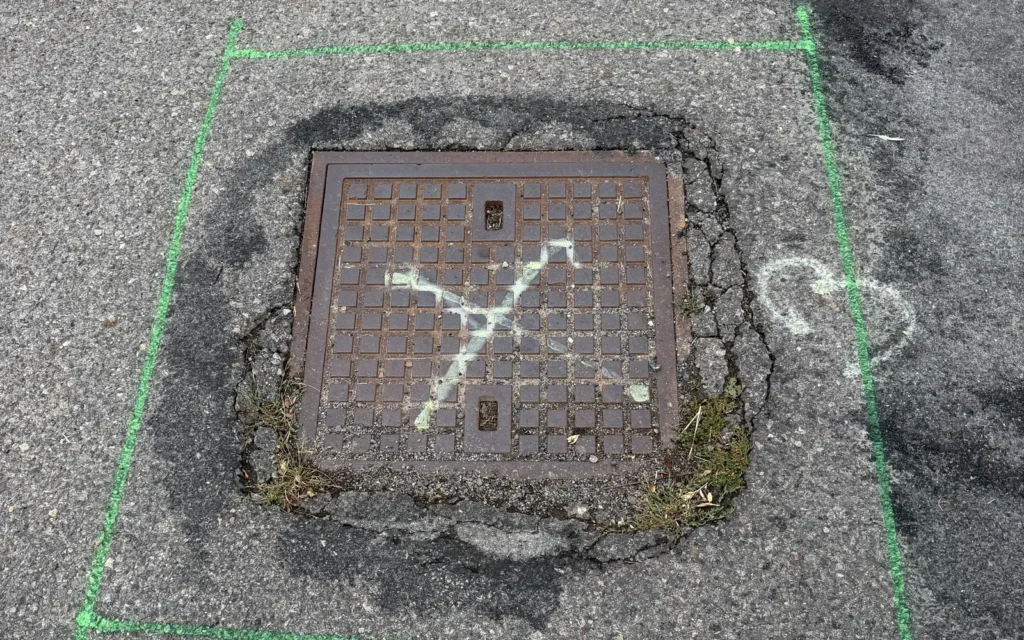
A sunken or rattling manhole cover in the road is not a cosmetic issue. It means noise, complaints from residents, a risk to drivers, and for the infrastructure manager one question: who is going to fix this? The answer depends heavily on whose cover you have in the road. This article explains how the warranty and claims process works at KASI, what the reality looks like with anonymous imports, and how to tell a product defect from an installation error.
What EN 124 guarantees and what it does not
Almost every manhole cover offer leans on EN 124 and a load class (D400, E600 and so on). It pays to know exactly what the supplier is promising. EN 124 confirms that a cover withstood the prescribed load in testing and met the requirements for safety and slip resistance. But it confirms the product at the moment of the test: one tested piece, at one point in time.
What the certificate does not tell you: whether the batch arriving a year from now will be built to the same quality; whether you will get a spare part in three years; and whether the manufacturer will still be around when a problem needs solving. Compliance with the standard is a necessary condition, but on its own it says nothing about what happens once the cover goes into service and starts to age. And that is exactly where the difference between a quality cover and a cheap import shows up. (We break down what the individual load classes mean in our article on EN 124.)
What warranty you get on KASI manhole covers
All our products carry a standard two-year warranty. On request, typically for specific projects and contracts, we offer an extended warranty of up to five years.
The extended warranty comes with three conditions:
- The right product for the traffic conditions at the installation site. “The right load class according to the standard” is not enough. A relatively light, cheap cover can still be class D400 and yet have no business on a busy arterial road. (We explain what the load classes mean in our article on EN 124.)
- Correct installation according to our requirements. The technical installation guidelines are available in the Downloads section.
- Use only after final installation. The cover must not be used during temporary traffic operation.
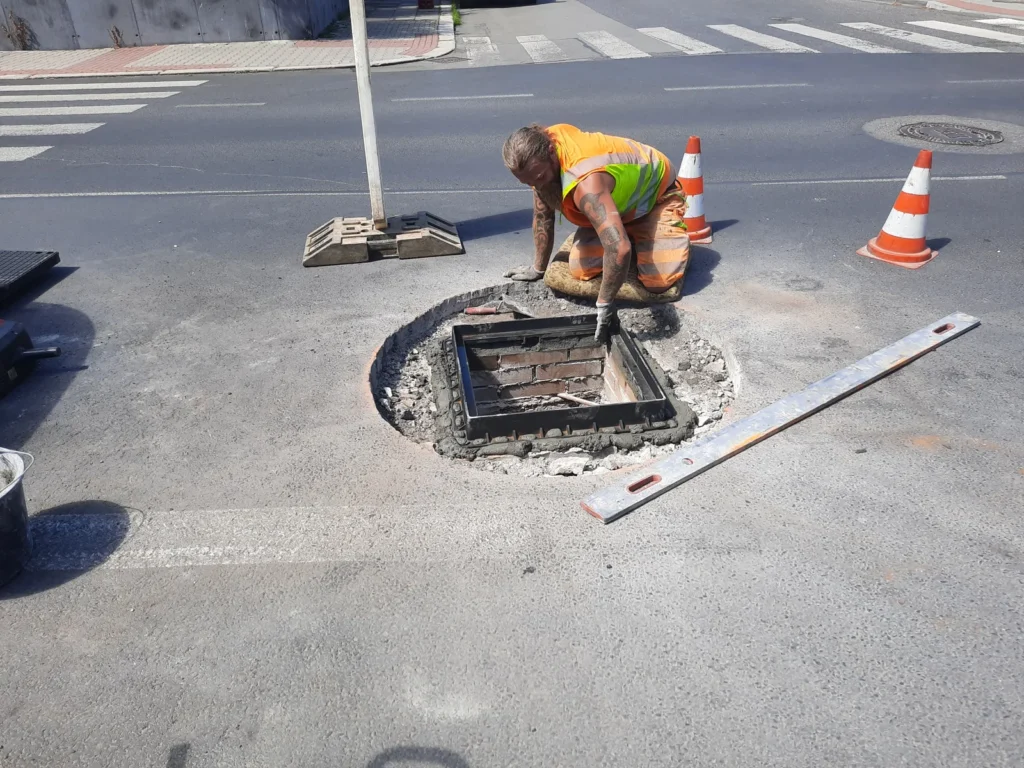
The process is straightforward: send us a request (which covers, which project, how many pieces, who is installing them). We contact the construction company, and during installation we come out to the site and check that everything is done properly. Only after that check does the project get its “stamp” and the extended warranty. That is precisely why we can stand behind it.
The full warranty terms, including the extended warranty terms and the application form for the 60-month extended warranty, are available in the Downloads section.
How a claim works with us step by step
The vast majority of claims on manhole covers come down to two situations: the cover is noisy (it rattles, the lid moves in the frame), or the cover has sunk into the road surface and become dangerous.
How should you proceed so that it gets resolved quickly and efficiently?
Phase 1: documentation
Send us as many photos and videos as you can: close-ups and wide shots, the cover from every side, especially the seating surfaces, hinges and springs, and above all the inside of the shaft. Add the details of the project and the installation date. A single photo of the cover in the road is not enough; there is very little to read from it.
As Jakub Albrecht of KASI puts it: “It is always better to send 50 photos and then delete 49 of them.”
Phase 2: assessment
Our team reviews the documentation. It may turn out that the fault lies in the installation, not in the product. But if the installation is sound, something went wrong elsewhere and we go and find it.
Phase 3: on-site investigation
When the documentation is not enough to decide, we come and look at the cover in person. We are a Czech company with production and with technical and service support based in the Czech Republic. We do not run a 24-hour emergency service, but our technicians respond as quickly as they can; the specific procedure is set out in our warranty terms.
And here is the part we pride ourselves on: even when we do not accept a claim, we still try to find the best possible solution to the situation. Make a replacement part, recommend a construction company, advise on what to do next. “We are here for our customers, we stand behind those people, and we always try to help,” says Jakub Albrecht.
How it works with cheap imports from Asia
We are not trying to scare anyone, only to describe how this market actually works. Asian manhole cover manufacturers never sell directly in the Czech Republic. There is always an intermediary in the chain: a European importer who orders the covers and often sells them under its own name. That has several practical consequences for whoever buys the cover:
- You handle the claim with the intermediary, not the manufacturer. You have no contact with the manufacturer, and the goods are often made to order for the intermediary.
- Products get renamed. The same underperforming product reappears on the market every few years under a new name: near-identical in design and appearance, just with a different brand on it. In Jakub Albrecht’s words: “The moment the market has had time to work out that something does not perform well, along comes a new version, but on an almost identical design basis.”
- The intermediary may not be around in a few years. When the importer that sold you the cover shuts down, there is no one left to turn to: no backing, no claim.
- Spare parts do not exist. A few years on, the manufacturer is making different products and sourcing from a different foundry. Getting a part for the cover you have in the road may simply not be possible.
The other side: KASI spare parts even after 15 years
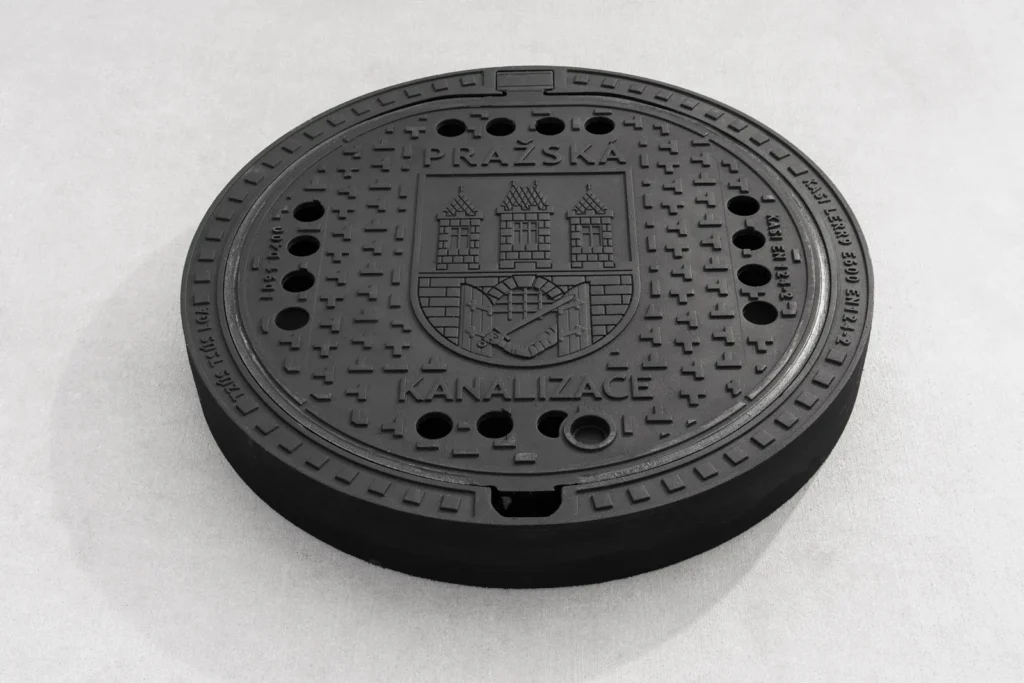
With us it works the other way round. We cast our iron in our own foundries near Nový Bydžov and in Chvaletice. That production independence means we do not depend on shipments from the other side of the world. We have been manufacturing for the long term and we are here for the long term, which is why we can supply spare parts even for discontinued ranges that have not been produced for years. “That cover might have been in the road for 15 years, and when someone says ‘I need this, here’s a photo’, in 99 % of cases we can make the part,” says Jakub Albrecht. It is also a question of cost, sometimes it works out better to cut the cover out and replace the whole thing, but the option is always there. (We cover when and how to handle a replacement in our article on replacing a damaged cover.)
Product defect or poor installation? Who is responsible for what
This is the most common core of a dispute, and it usually comes down to conditions that were not met, conditions without which we cannot hold a warranty.
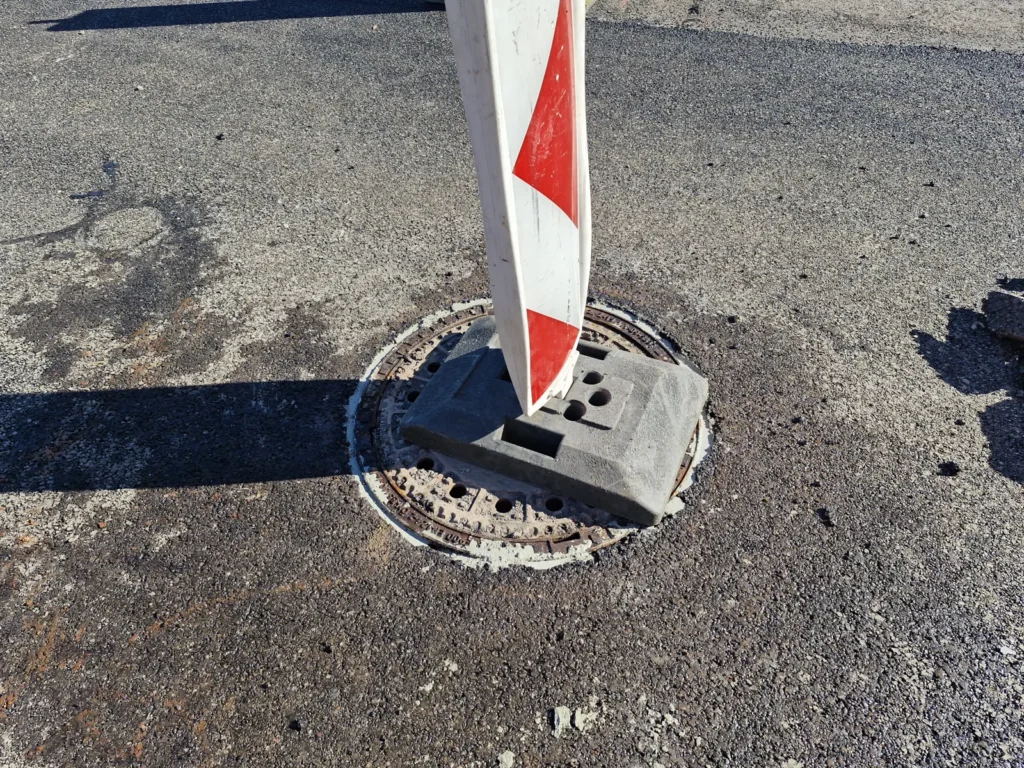
- Installation error: failure to meet even the minimum technical installation requirements. As construction companies become more professional and increasingly use specialists for cover installation, these cases are now rare, but even today we occasionally come across things like adjustment rings and frames set dry without mortar, wooden wedges under the frame, or a frame seated off the shaft. Covers are also often used in temporary mode: already carrying traffic, but before final installation. Correct installation is the responsibility of the contractor. Even the best cover can fail if it is installed badly. A frame that is not properly supported can deform under traffic load, and then even a quality lid will rattle.
- Hidden defect: the installation is sound, the cover has not sunk, the frame is not twisted, and yet the cover does not hold as it should. That is when our technicians take over.
KASI honours the warranty on products that meet the warranty terms, meaning correct use and correct installation of the products. Where that is not the case, the warranty does not apply to the product.
Checklist: what to do before you buy a cover and when you file a claim
Before you buy:
- Check who the actual manufacturer is and how long it has been on the market.
- Ask about spare parts availability and how old a product the supplier can still supply parts for.
- Choose according to the real traffic conditions at the site, not just the load class in the catalogue. We will advise you.
- On important projects, ask for the extended warranty with an installation check. It is insurance for both sides.
When you file a claim:
- Photograph everything: the cover in the road, close-ups and wide shots, from every side, and above all the inside of the shaft. Fifty photos beat one.
- Track down the project details, the installation date and who did the installation.
- Send it to us as soon as you can. The better the documentation, the faster the assessment, with no site visit needed.
In closing: a warranty is only as good as the company behind it
A warranty on paper will not repair a sunken cover. What decides the outcome is whether the manufacturer can be reached, whether they come out, whether they can make a replacement part, and whether they still talk to you when the claim turns out not to be justified. You get all of that from us: we are a Czech manufacturer, we produce here, and we are here for you for the long term.
Dealing with a specific cover, whether it is selection, an extended warranty or a claim? Get in touch and we will help you find a solution.