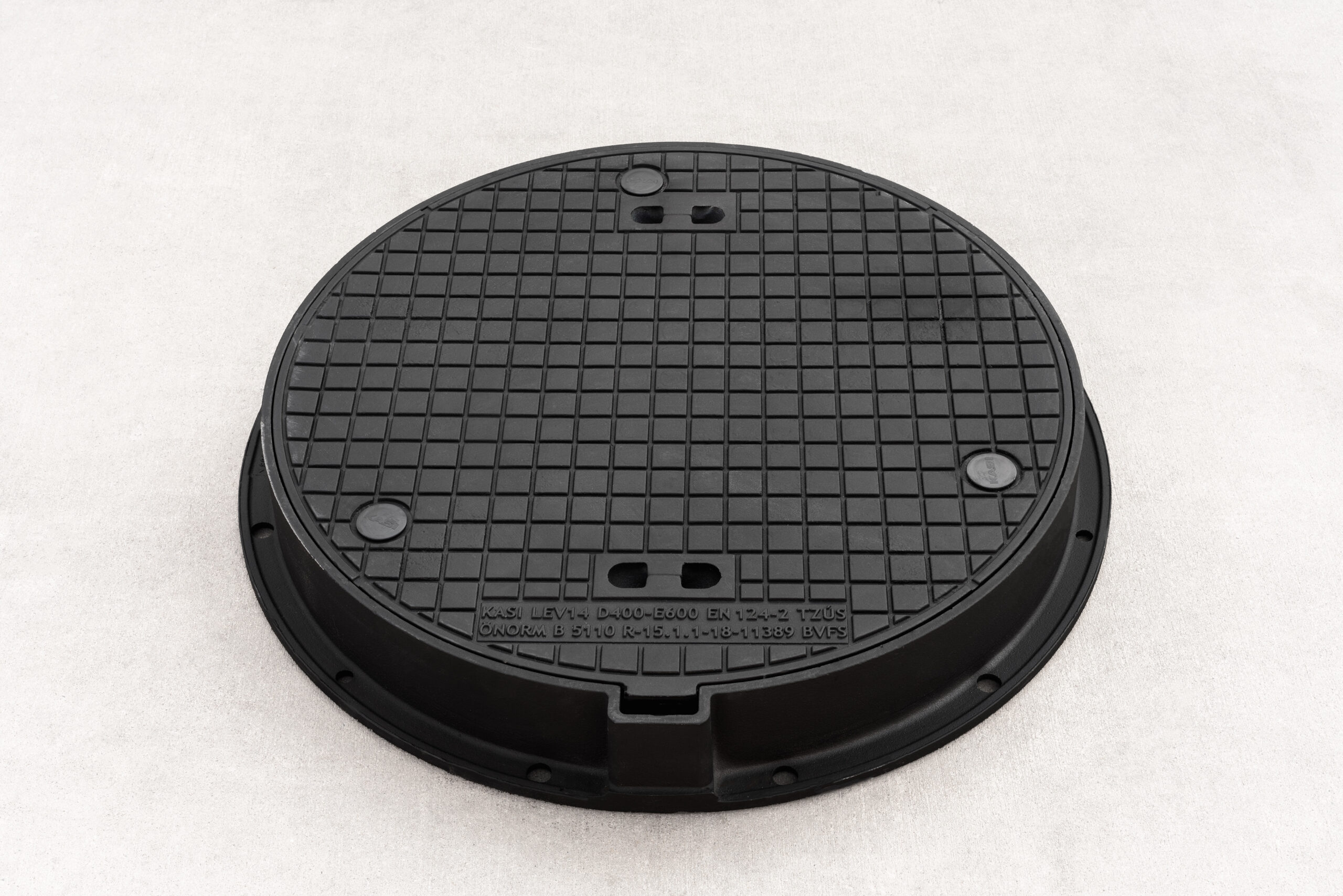
Coatings applied to manhole covers are not merely a matter of appearance. In fact, they serve two distinct purposes – aesthetic and protective. While the coating on the top surface primarily addresses the visual appearance of the roadway, the protective coating on the underside plays an important role in extending the service life of cast iron in the aggressive environment of a sewer system.
The Visible Side of the Cover: Aesthetic and Project Handover Functions
The top coating serves primarily aesthetic purposes and helps meet project handover requirements. Newly installed manhole covers blend visually into the new roadway and do not appear out of place.
Another reason for applying a coloured coating is the thin oxidised layer that may appear on the surface of cast iron covers. This surface discoloration can raise questions or concern customers. You can learn more about why rusty manhole covers are not a functional issue in our dedicated article on the subject.
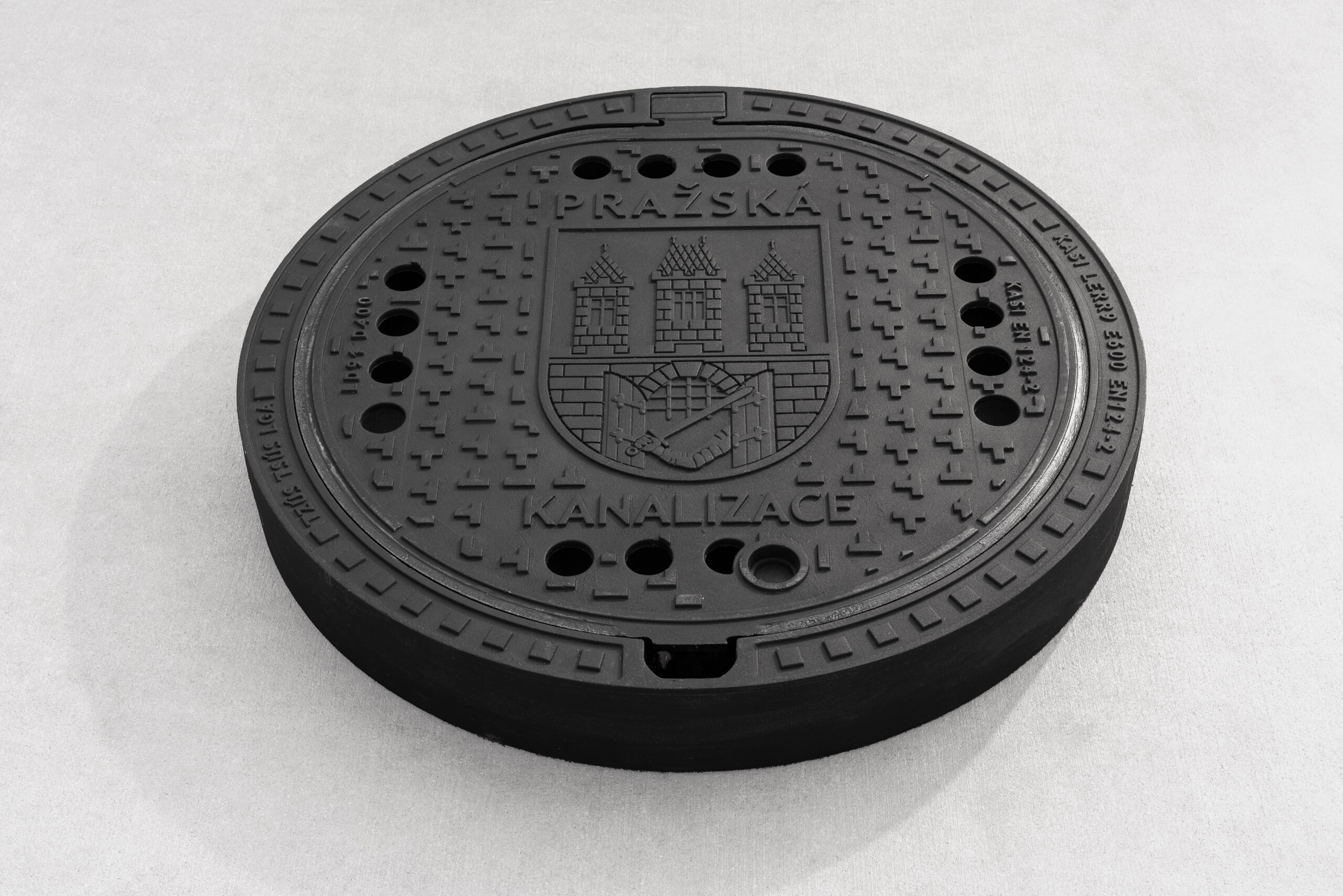
It should be noted that the upper surface of a manhole cover is exposed to extremely demanding conditions. Vehicle tyres, abrasive road grit, dust, water and winter maintenance operations continuously act on the surface, causing the top layer to wear away naturally over time. This is neither a defect nor a quality issue, but a normal consequence of regular use. Even high-quality coatings gradually wear off, and the cover eventually develops its typical appearance.
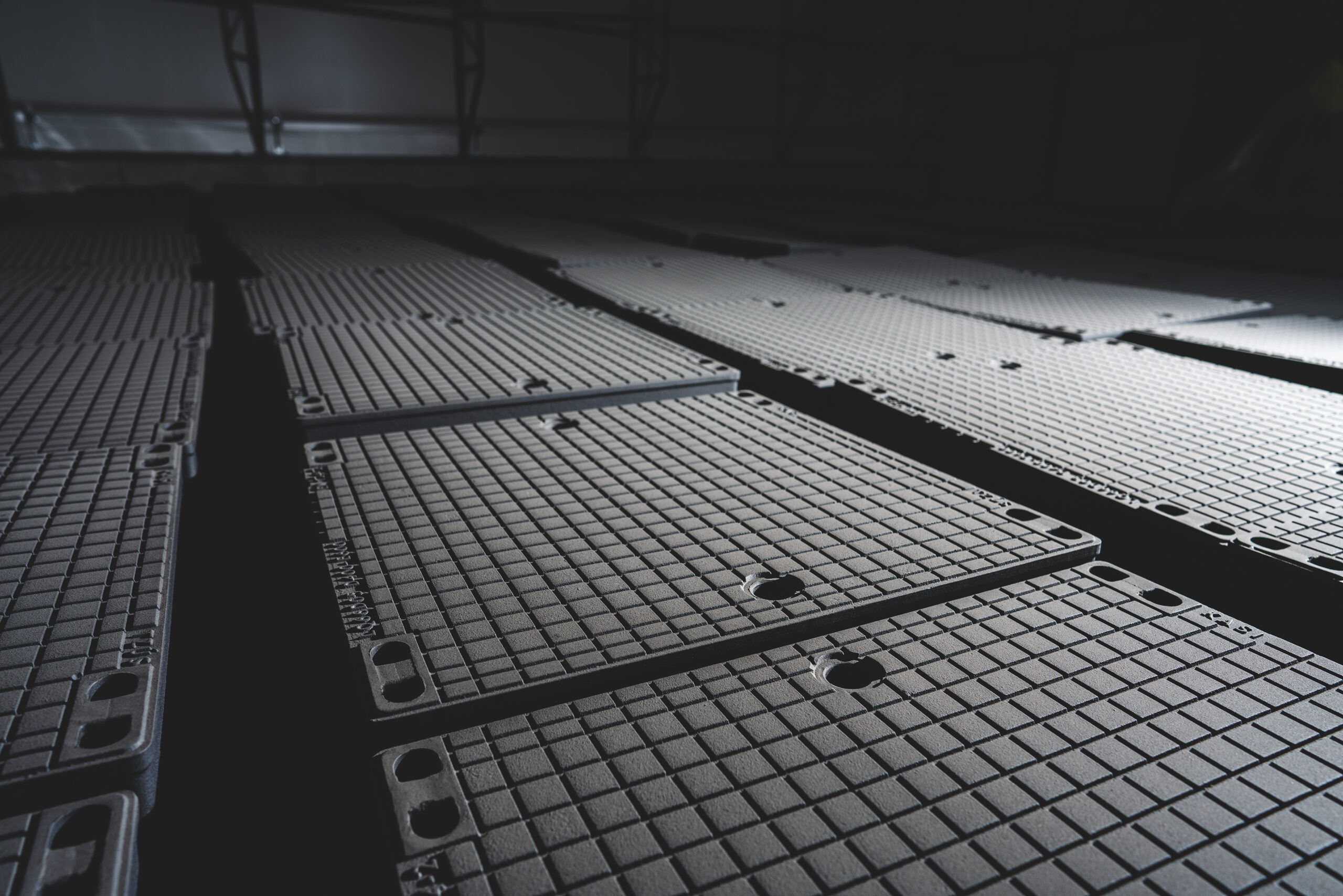
The Underside of the Cover: Protection Against an Aggressive Environment
From a technical perspective, the protective coating on the underside of the manhole cover plays a much more significant role. The underside is continuously exposed to the aggressive environment inside the sewer chamber.
In modern sewer systems, where foul water and stormwater are separated, higher concentrations of chemical substances and condensates can occur. As a result, coatings used in these conditions require particularly high resistance.
Hydrogen sulphide and other aggressive compounds commonly form within sewer systems. These substances can gradually attack cast iron and reduce the service life of the cover. The underside coating therefore acts as a protective barrier between the cast iron and the aggressive environment of the chamber.
Unlike the upper surface, the underside is not subjected to direct traffic loads. As a result, the protective layer remains intact for a long period and can continue performing its function for many years.
The thickness of the protective coating on the underside is typically around 120 microns. In more demanding applications, such as the food-processing or chemical industries, reinforced coating systems are used, with total thicknesses exceeding 250 microns, depending on project requirements, to ensure maximum chemical and corrosion resistance.
Modern Coating Materials
Modern protective systems are far more sophisticated than ordinary paint. High-quality solutions often consist of multilayer powder coatings with a zinc-rich primer, combining anti-corrosion properties with enhanced chemical resistance.
The Czech Republic and International Markets
Until recently, painted manhole covers were relatively uncommon in the Czech Republic. In many foreign markets, however, protective and decorative coatings are considered a standard part of the product and are routinely applied as part of the final surface treatment.
For companies exporting manhole covers, it is therefore advisable to take into account the specific requirements and expectations of the target market or investor.
Would you like to learn more about coatings for manhole covers or their other properties? Do not hesitate to contact us – we are here to help.